
Flight Reductions Continue Across the U.S. Amid Government Shutdown ✈️🚧
As the government hits yet another impasse, the skies above the United States are seeing a turbulent shift of a different kind. Flight reductions, akin to a sudden gust of wind on a sunny day, are sweeping through the nation, leaving weary travelers and airlines to navigate the chaos. What was once the rhythmic hum of airline schedules is now a muffled whisper, drowned out by the bureaucratic winds of a shutdown. 🏢❌
The irony is almost palpable: a government meant to facilitate and regulate travel now serves as a significant impediment to it. Just as an editor can cut lines from a manuscript, the shutdown has led to an unceremonious trimming of flight routes, particularly those overseen by federal agencies essential to aviation operations. Delayed approvals, staffing shortages, and a general sense of uncertainty have prompted airlines to cancel or reduce flights, making travel plans as precarious as walking a tightrope without a safety net.
The Impact on Travelers and Airlines
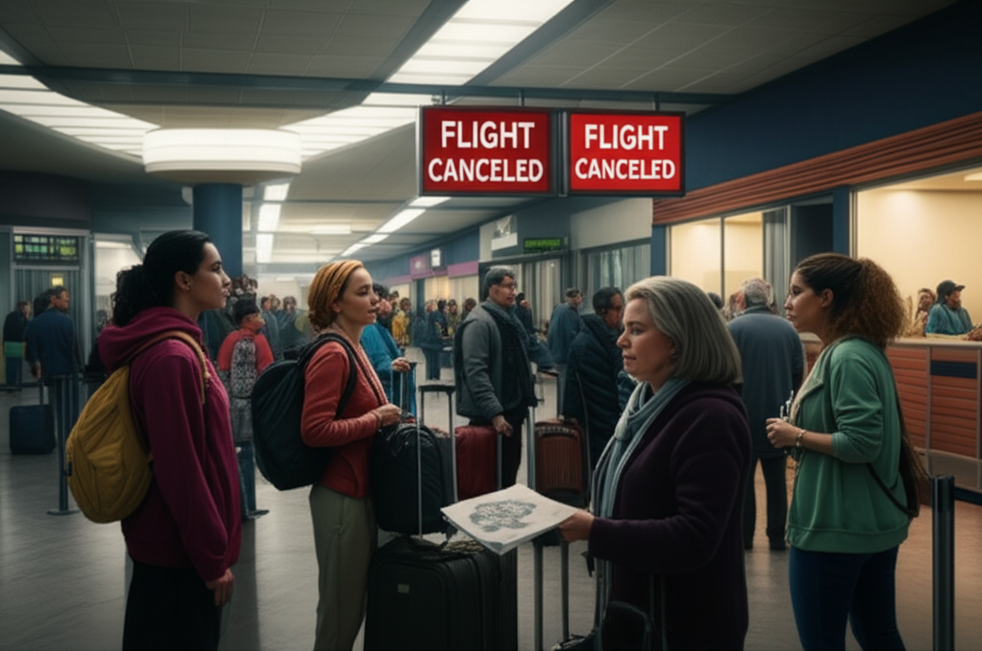
For air travelers, the fallout is substantial. Flights are being cut faster than a headline can be rewritten during breaking news. According to data from the U.S. Department of Transportation, airlines have reduced their schedules by approximately 20% since the shutdown began. Major hubs like Atlanta and Chicago, once bustling with the excited hum of travelers, are now notably quieter. Passengers find themselves facing extended wait times, unexpected cancellations, and a hefty dose of frustration— the emotional spectrum of air travel condensed into a singular experience.
- Flight Cancellations: A surge in cancellations has led to many passengers stranded, reminiscent of sailors lost at sea without a compass. 🧭
- Increased Fares: With fewer flights available, an uptick in airfares has cast a shadow over travel budgets. The irony continues as the need for travel clashes with rising costs. 💸
- Consumer Confidence: As travel plans unravel, consumer trust in the airline industry is taking a hit, akin to a house of cards teetering on the edge of a table. 🏚️
Yet, beyond the chaos, there remains a striking antithesis within the airline industry itself: while many airlines struggle, the demand for travel persists. Like steadfast ships sailing through stormy waters, some carriers have chosen to adapt, adjusting their routes and schedules to keep the planes flying. The resilience displayed by certain sectors within the airline industry contrasts starkly with the broader operational debilitating effects of the government’s shutdown.
A Broader Economic Ramification
The ripple effects of reduced flights extend far beyond the airport’s perimeters. Local economies, particularly those reliant on tourism, are feeling the pinch. With fewer visitors arriving, businesses that thrive on foot traffic—restaurants, hotels, and attractions—face financial strains. It’s a somber dance between demand and supply, each step choreographed by the unseen hand of government policy. 🎭
The government shutdown, while a political spectacle, plays out as an economic drama at play, affecting everyone from the casual traveler to the local shop owner. Just as a momentary closure of a popular regional park can ripple out to impact surrounding economies, so too does each flight cancellation resonate through communities connected by air travel.
What Lies Ahead for Air Travel?
As this government shutdown drags on, the future of air travel remains cloaked in a haze of uncertainty. Will airlines streamline operations further to weather the storm, or will they push back against these constraints as the desire for travel grows unabated? The tug-of-war between government regulations and airline flexibility reflects a larger narrative about the resilience and adaptability required in challenging times. 🌦️
Travelers, meanwhile, are left to ponder their options, wondering whether their next journey will be smooth sailing or a turbulent ride. In this climate, the seasoned wanderer—those akin to the stoic trees bending in the wind—might emerge with tales of resilience and patience, while others may find themselves grounded, dreaming of destinations just out of reach.
Ultimately, the interplay of government action and airline response offers a poignant reminder of the interconnectedness of our world. What starts as a governmental detour results in the detours of full itineraries, highlighting how policy decisions, much like storms, can blow across vast landscapes, altering destinies in their wake.

